How Scaler cuts the cost of sustainability assurance
Catch the issues before auditors do. Reduce the weeks your team spends preparing for external verification
The assurance problem is getting worse
CSRD, California climate disclosure laws, ASRS, and IFRS S2 are making sustainability data assurance mandatory for thousands of companies. GRESB already requires third-party verification for top scores. Institutional investors want independent assurance before they allocate capital.
For real estate investment managers, this means weeks of preparation before auditors even arrive: chasing property managers for evidence, cross-checking meter readings, compiling audit trails from fragmented systems. It is expensive, it delays fund reporting, and it creates real risk when data quality issues surface late.
AI analysis: portfolio-wide data quality in seconds
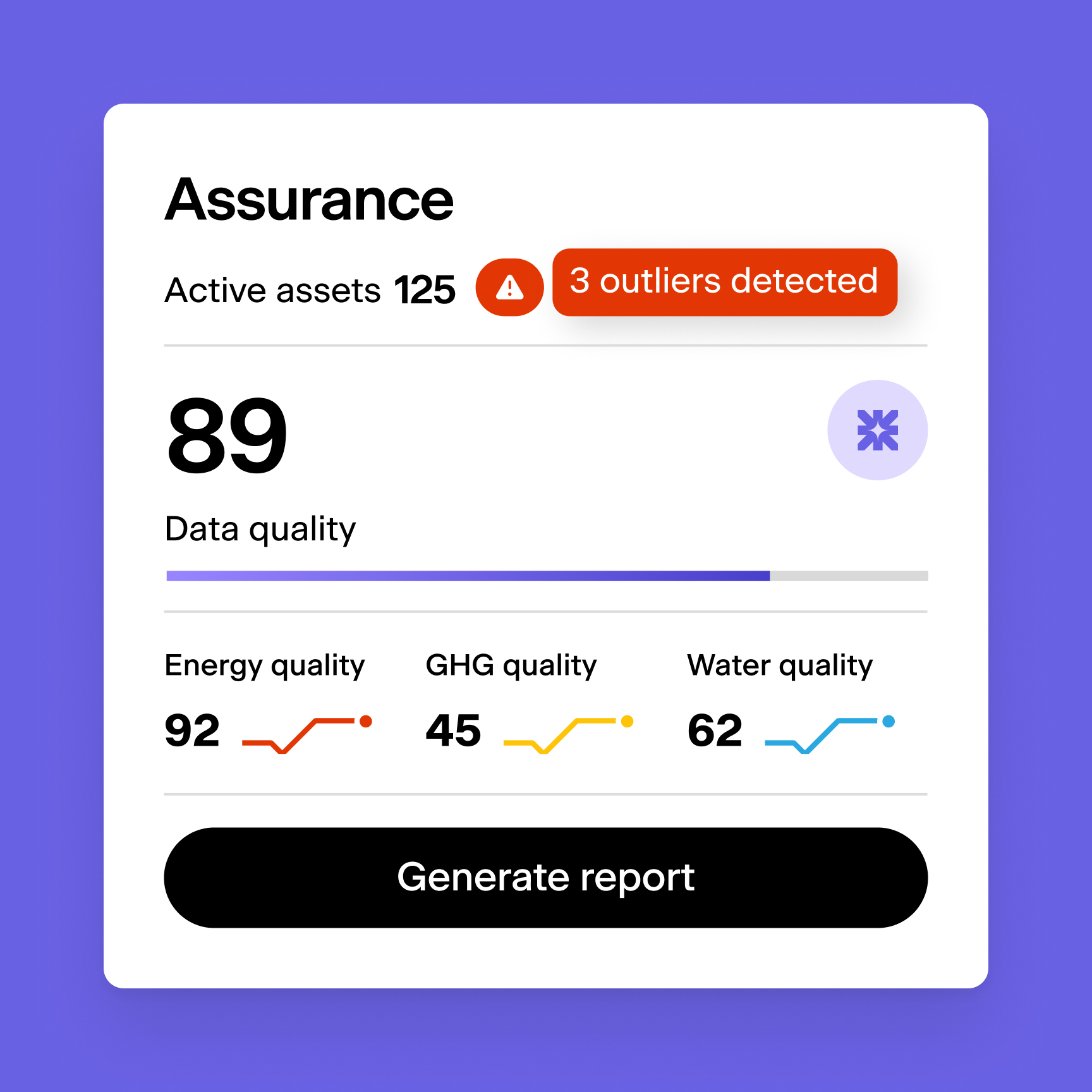
Scaler's AI verification analyses your entire portfolio's sustainability data, identifying outliers, anomalies, and systemic issues that manual review would miss.
It catches:
- Systematic data entry errors repeated across assets.
- Incomplete data coverage where assets below 90% pollute portfolio averages.
- Anomalous consumption patterns like a consumption spike paired with a cost drop.
- Missing GRESB preferred fields, flagged per asset so your team can fill gaps before submission.
The analysis understands property types, climate zones, occupancy patterns, and hemisphere-specific seasonal logic. A heating fuel spike in July is normal in Melbourne but suspicious in Amsterdam.
Report readiness: know where you stand before the audit
Scaler's report preparation dashboard shows data quality across three dimensions before you enter an audit cycle.
Data readiness shows whether all required fields are complete, with actionable drill-downs for assets that need attention.
Data coverage shows what percentage of floor area is covered by metered data. An asset reporting 100% readiness but only 52% coverage is producing extrapolated numbers, not measured ones. Auditors will question that.
Data reliability based on PCAF Quality Scores breaks down the source mix: smart meters, invoices, standard estimates, manual entries. An asset relying on postal code estimates is not in the same league as one with 93% meter and invoice coverage.
Auditors assess both accuracy and completeness. Scaler surfaces the distinction before you submit.
Full audit trail: built in, not bolted on
Every modification in Scaler is logged automatically: who changed what, when, and how (manual entry, file upload, or API). The log is filterable by event type and changes can be reversed with a full record of the correction.
This extends into reporting. Every generated report includes a toggle able audit trail with:
- Calculation methodology and standards referenced.
- Unit conversion factors for energy, water, and waste metrics.
- Emissions factors with version numbers and sources.
- Asset-level data exports behind every aggregated number.
The evidence lives in the deliverable itself. No more "can you provide the source data for page 14?" back-and-forth.
What this saves
For a typical institutional portfolio of 50 to 100 assets, external verification costs €5,000 to €50,000+ annually. But the hidden cost is larger: 2 to 6 weeks of internal preparation. That is time not spent on actual sustainability improvement.
Scaler does not replace external assurance. But it dramatically reduces what your team needs to do before auditors arrive:
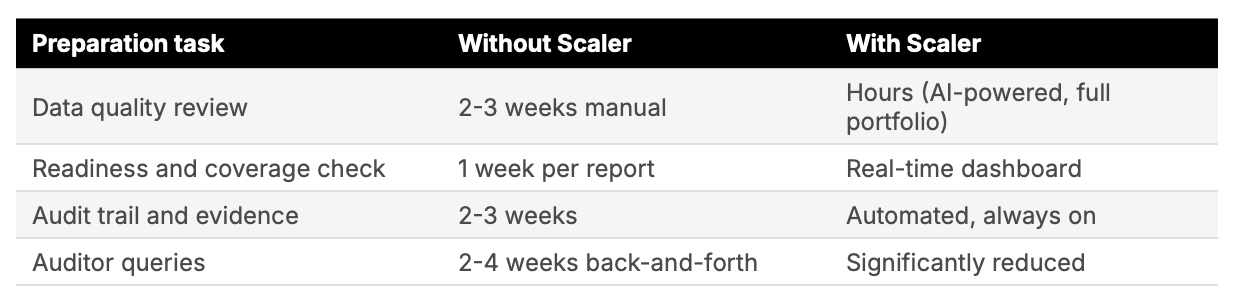
The shift: from reactive audit preparation to continuous data quality management. Issues caught throughout the year, not discovered under pressure during verification season.
Security
All AI analysis runs within Scaler's secure infrastructure. No portfolio data leaves the platform. No data is used for model training. Full prompt logging and audit trails for AI interactions.